Reversible ploughs need precise hydraulic control. Without it, the overturning mechanism won’t work smoothly. Choosing the right Plough Overturning Valve Manufacturer matters a lot. It decides how well your plough performs in the field. This guide covers what these valves do. It also explains why Indian manufacturers are a smart choice for this component.
What Is a Plough Overturning Valve?
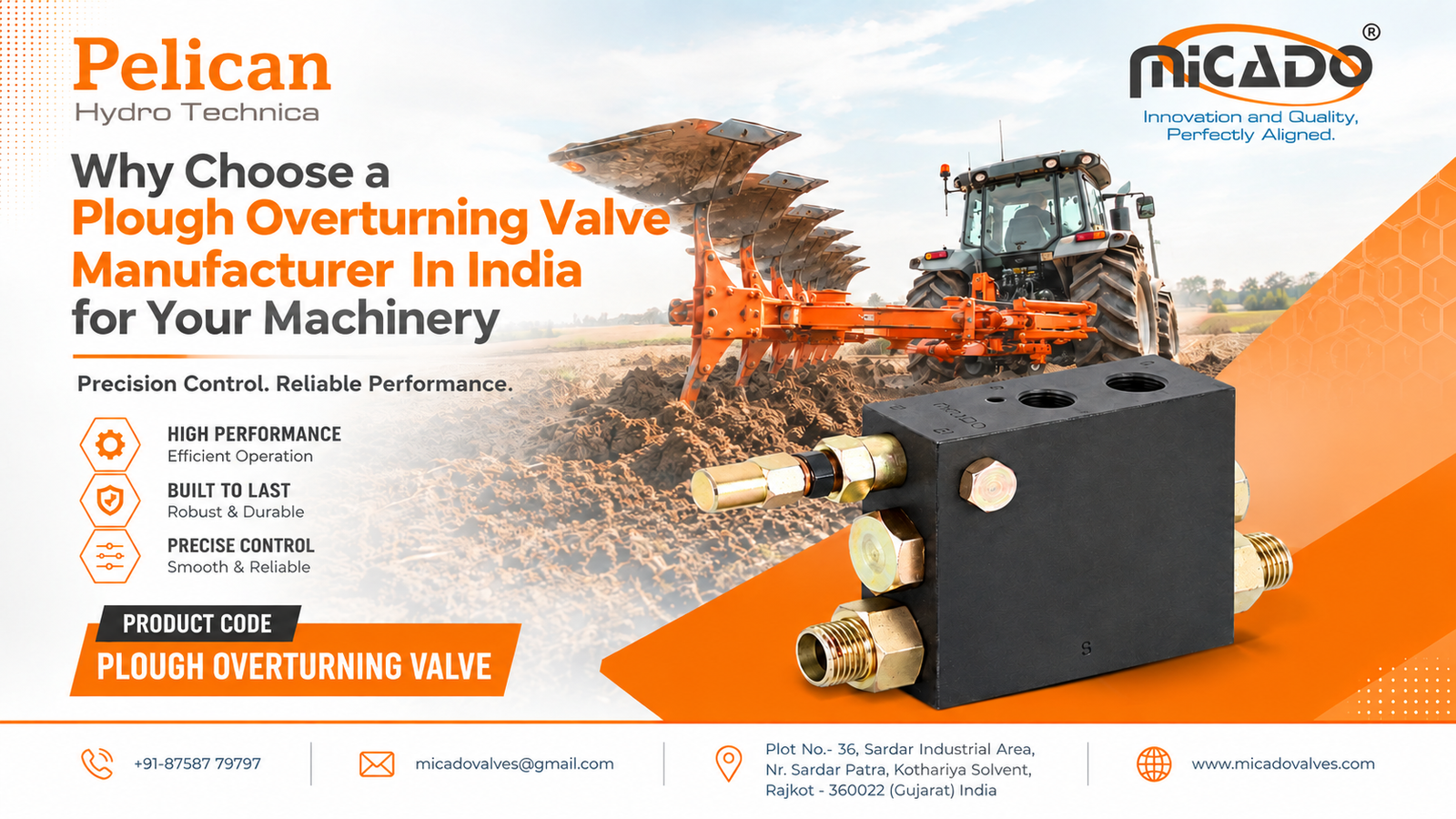
A plough overturning valve controls the rotation of a reversible plough. It directs hydraulic fluid to the actuator responsible for flipping the plough body. This lets the plough switch sides at the end of each furrow. The valve manages flow direction and timing. It ensures the turning motion happens smoothly, without sudden jerks or stalling.
This valve type differs from general-purpose directional valves. It’s built for one specific job. Precision matters more than flexibility here. A well-made valve turns the plough cleanly every single pass. A poorly made one causes jerky motion or incomplete turns.
Why the Right Plough Overturning Valve Manufacturer Matters
Not every manufacturer builds this valve to the same standard. A dependable Plough Overturning Valve Manufacturer focuses on precision casting. Tight-tolerance machining matters just as much. Every valve should undergo pressure testing before it leaves the factory. This ensures consistent performance across every field pass.
Poor quality valves cause real problems. Incomplete plough rotation is common. Hydraulic leaks show up too. Spool sticking leads to delayed or failed turns. These issues slow down fieldwork. They also increase wear on other plough components over time.
Key Features of a Reliable Plough Overturning Valve
Look for these features when comparing manufacturers:
- Smooth, controlled flow direction — ensures the plough turns cleanly without jerking.
- High working pressure tolerance — handles the force needed to flip heavy plough bodies.
- Durable seals and spools — resist wear from constant directional switching.
- Compact, rugged housing — withstands field vibration, dust, and moisture.
- Standardized porting — makes installation and replacement straightforward.
- Compatibility with tractor hydraulic systems — fits standard mounting and connection points.
A manufacturer who documents these specs clearly is worth trusting. Vague claims without data are a red flag.
How Plough Overturning Valves Work in the Field
Reversible ploughs flip at the end of each row. This avoids leaving unplowed strips between passes. The overturning valve triggers this flip automatically or on operator command. Here’s how the process typically unfolds.
Triggering the Turn
The operator engages the hydraulic function at the row’s end. The valve directs fluid to the rotation cylinder. This starts the plough’s turning motion. Timing matters here. A slow or delayed response wastes time and fuel.
Completing the Rotation
The valve must sustain flow until the plough fully rotates. Then it needs to stop cleanly. No fluid should leak past the spool during this phase. Leakage causes incomplete turns or unwanted drift. A well-engineered Plough Overturning Valve Manufacturer designs for this exact precision.
Locking the New Position
Once rotated, the plough needs to stay locked. The valve’s check function prevents reverse movement. This keeps the plough stable during the next furrow. Stability here protects both the plough and the tractor’s hydraulic system.
Applications Beyond Standard Ploughing
While reversible ploughs are the primary use case, overturning valve technology extends further.
Multi-Bottom Reversible Ploughs
Larger ploughs with multiple bottoms need stronger overturning valves. These handle more weight and more hydraulic force. A Plough Overturning Valve Manufacturer experienced with multi-bottom configurations understands these added demands.
Custom Agricultural Implements
Some specialized implements use similar rotation mechanisms. Disc harrows and certain tillage tools borrow this valve logic. Manufacturers who build true overturning valves can often adapt designs for related equipment.
Export and OEM Supply
Tractor and implement manufacturers often source these valves directly. They integrate them into new equipment during assembly. A supplier with OEM experience understands integration requirements better than a general valve trader.
Why India Has Become a Preferred Source for Plough Valves
Global buyers increasingly look to India for agricultural hydraulic components. There’s a clear reason for this shift. An experienced Plough Overturning Valve Manufacturer based in India combines engineering skill with cost efficiency. Export readiness adds further value.
Manufacturing Expertise in Gujarat
Rajkot, Gujarat, has grown into a strong hub for hydraulic valve production. Many manufacturers here have over a decade of experience. They work closely with agricultural OEMs. Farm equipment exporters rely on them too.
Cost-Effective Without Compromising Quality
Indian manufacturers offer competitive pricing. This doesn’t mean cutting corners on pressure ratings or materials. Custom valve designs are common. Manufacturers collaborate directly with equipment builders on specifications.
Dependable Supply and Support
Raw materials like cast iron and alloy steel stay accessible locally. This keeps production timelines predictable. Export-ready manufacturers already understand international standards. They handle documentation smoothly for overseas buyers too.
What to Ask Before Choosing a Supplier
Before finalizing an order, ask these questions:
- Do they provide technical datasheets? Check pressure ratings and flow specifications.
- Can they supply sample units for field testing? Trials prevent costly mistakes.
- Do they manufacture in-house? Confirm this instead of relying on imported components.
- Can they share references from tractor or implement manufacturers? Real client history matters.
- Do they offer custom configurations for multi-bottom ploughs? Flexibility counts for larger equipment.
A transparent Plough Overturning Valve Manufacturer answers these clearly. Evasive answers or vague specs are worth avoiding.
Conclusion
A plough overturning valve seems like a small component. Its impact on fieldwork is significant, though. Smooth, reliable turning saves time every season. It also protects your equipment from unnecessary wear. Whether you need valves for standard or multi-bottom reversible ploughs, the manufacturer you choose matters. Look for an experienced Plough Overturning Valve Manufacturer with proven precision engineering. Genuine in-house manufacturing and field-tested reliability make the real difference.